What Happens to Our Brain When Work Falls Apart
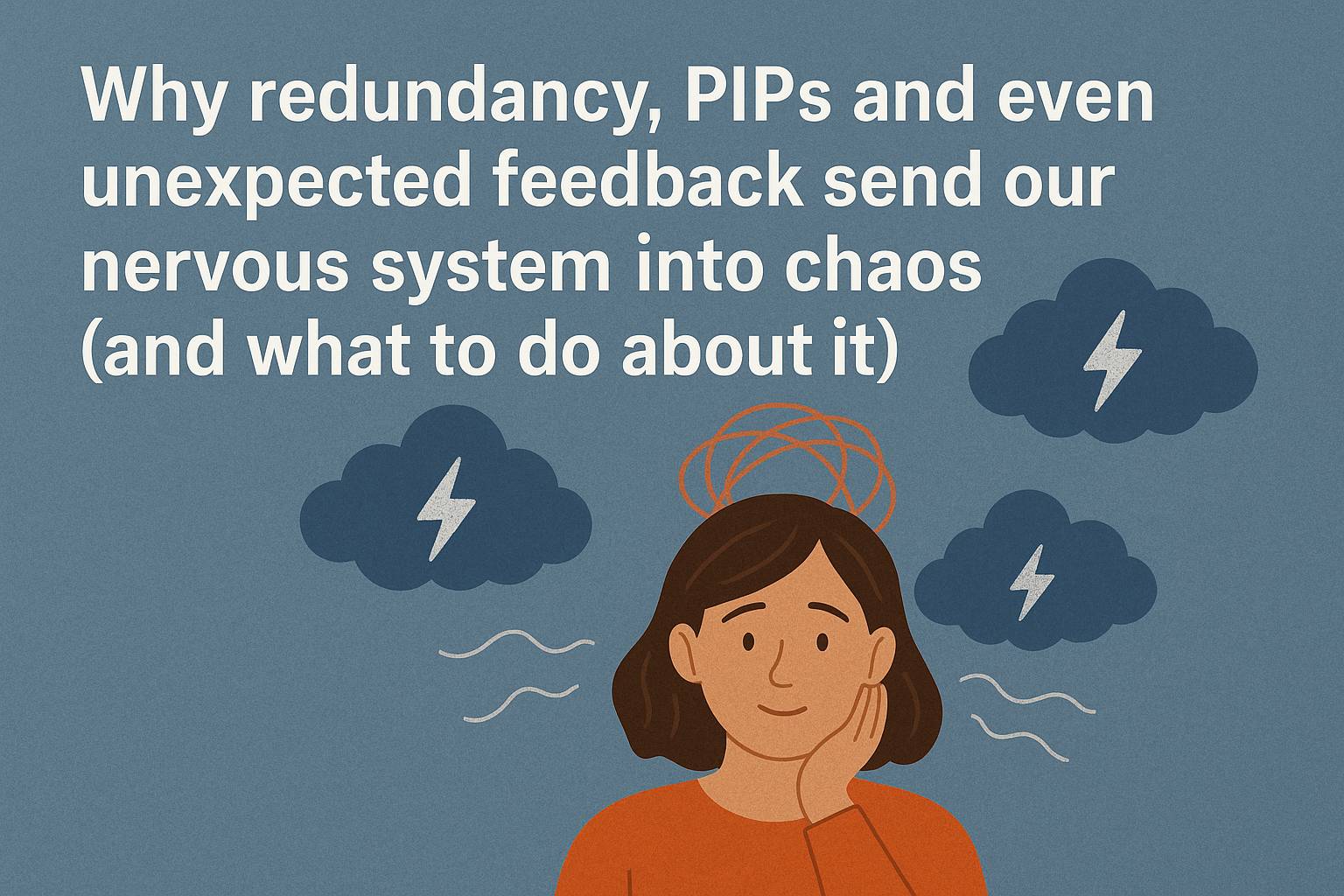
Why redundancy, PIPs and even unexpected feedback send our nervous system into chaos (and what to do about it)
This week alone, we’re supporting two clients who were made redundant—three weeks from Christmas. It’s the time of year when work and family life can already feel like a pressure valve, and when that is suddenly, unexpectedly disrupted, people don’t just get stressed - their entire nervous system takes a hit.
While we’re helping our impacted clients maximise their exit packages, figuring out the next career move, and get clear on their rights, there’s another piece we always focus on:
What is happening inside your brain and body when something like this blindsides you?
Because if we understand what’s happening, we have a better chance of regulating our emotions to respond rather than react, and end up with the best possible outcome from a tricky conversation.
Your Brain is in Threat Mode
The moment you get that calendar invite, hear the words “your role is impacted,” or sense that something is off, your brain does the same thing:
It flips into survival mode.
Your autonomic nervous system initiates a threat response, and a cascade of chemistry floods your body:
● Adrenaline & noradrenaline – your body’s alarm sirens
● Cortisol – the hormone that helps you survive short-term emergencies
● Increased glucose mobilisation – energy diverted away from thinking, toward survival
● Increased amygdala firing – your fear/emotion centre goes into overdrive
● Reduced prefrontal cortex (PFC) activity – the part of your brain responsible for reasoning, planning, and communication takes a backseat.
This is why you’ve said:
● “I can’t remember anything from that meeting.”
● “I froze.”
● “I couldn’t stop myself from getting defensive”
● “I just couldn’t find the words until after the meeting and then I was kicking myself for not saying more”
Why It Hits So Hard (Especially at Work)
Work isn’t just tasks. It’s identity, safety, financial stability, belonging, routine, and self-worth—all bundled into one ecosystem.
When your job is threatened, every level of your brain interprets that as danger:
1. The survival brain: “We’re not safe.”
This is the amygdala shouting that your ability to provide for yourself and your family is at risk.
2. The emotional brain: “I’m being rejected.”
Humans are wired for connection. Being pushed out triggers our social pain circuitry—the same circuitry activated in physical pain.
3. The logical brain: “What does this mean for me?”
Except the logical brain (the PFC) is snoozing in the backseat, so this becomes a spiral instead of a plan.
This is why people in exit meetings often describe:
● feeling outside their body
● having trouble processing what’s said
● wanting to argue or freeze, or both
● not asking the questions they meant to ask
● walking away confused or angry at themselves
The Emotional Crash After the Meeting
Once you leave the room, the stress chemicals don’t immediately settle.
You may experience:
● brain fog
● difficulty sleeping
● obsessively rehashing the meeting
● irritability
● rumination
● forgetting basic things
● emotional volatility
This is cortisol still circulating. This makes the memory + meaning-making centre in your brain struggle against threat chemistry. This is your PFC trying to reboot. And that’s why the first job—before strategy, LinkedIn updates, or next steps—is regulation. I promise we’ll get to the strategy, the resume rewrite, but we want to help you regulate first.
How to Regulate After a Workplace Shock
Here are the nervous system reset tools we teach clients:
1. Long exhales
Preferably 1:2 ratio (inhale 3, exhale 6).
Long exhales signal that the danger has passed.
2. Name the state, not the story
“I’m in a stress response.” This shifts you out of emotional brain and gives the PFC a tiny oxygen window.
3. Cold water (yes, really)
Cold exposure on the face can drop your heart rate and reduce amygdala activity.
4. Orienting
Turn your head slowly and look around the room. Notice objects, colours and sounds. Your brain can recalibrate and see there is “No danger here.”
5. Don’t make big decisions in the first 48 hours
Your cognitive capacity returns gradually as cortisol clears and PFC function returns.
Why This Matters for People Navigating Redundancy or PIPs
When you understand that your brain is doing exactly what it was built to do: You stop blaming yourself for freezing, crying, forgetting or feeling like you’re falling apart. You begin to see your reactions as biological, not a symptom of your inability to cope
And from there? You regain your power.
If You’re Going Through This Right Now
We see you. Your job may have been impacted - but you are still capable and worthy
Once the brain settles, the strategy becomes clearer. Your next step becomes possible.
Impact starts with understanding - and we’re here in your corner for every part of it
Other Posts You May Like...
Lorem ipsum dolor sit amet, consectetur adipiscing elit.